
Chinese radicals: which 50 should you learn first?
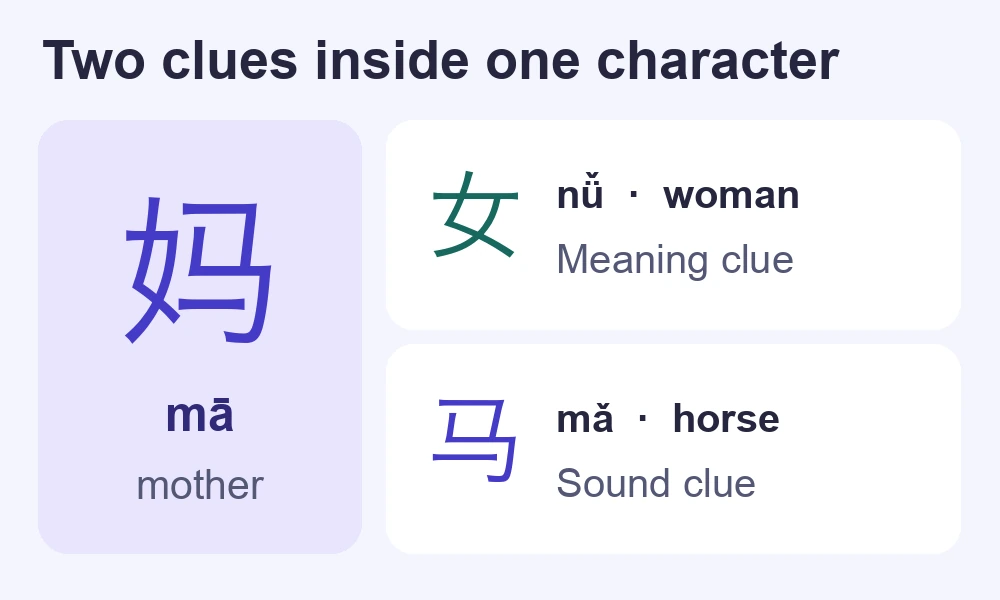
Look at 妈 (mā, mum). Cover its right half and you can still see 女, the same shape that appears in 姐 (jiě, older sister). Cover the left half instead and you see 马 (mǎ, horse). One part gives you a clue to the meaning of 妈. The other gets you close to its sound. You can use this little experiment on the next character you meet.
What is a Chinese radical?
A radical, or 部首 (bùshǒu), is the component a dictionary uses to file a character. If you know how a character looks but have forgotten its pronunciation, a radical index gives you a way to look it up. In a traditional index you find the radical first, then count the remaining strokes. The dictionary assigns the entry a place even when you can see several familiar shapes inside it.
For someone learning to read, the most useful question is often simpler. Do you recognise something you have seen in a word you already know? The 女 in 妈 gives you a useful connection with words for women in a family. The sound clue 马 gets you the syllable ma, but the tone changes. Read the complete character and check its pinyin before you try saying the word.
Which radicals should a beginner learn first?
The traditional Kangxi system has 214 radicals. It is an indexing system covering thousands of characters. For a first reading session, pick three you can find in words you already use. Try 人 in 你 (nǐ, you), 口 in 吃 (chī, eat) and 水 in 喝水 (hē shuǐ, drink water). Here 水 is a whole character. In 河 (hé, river) the same component fits down the left side as 氵.
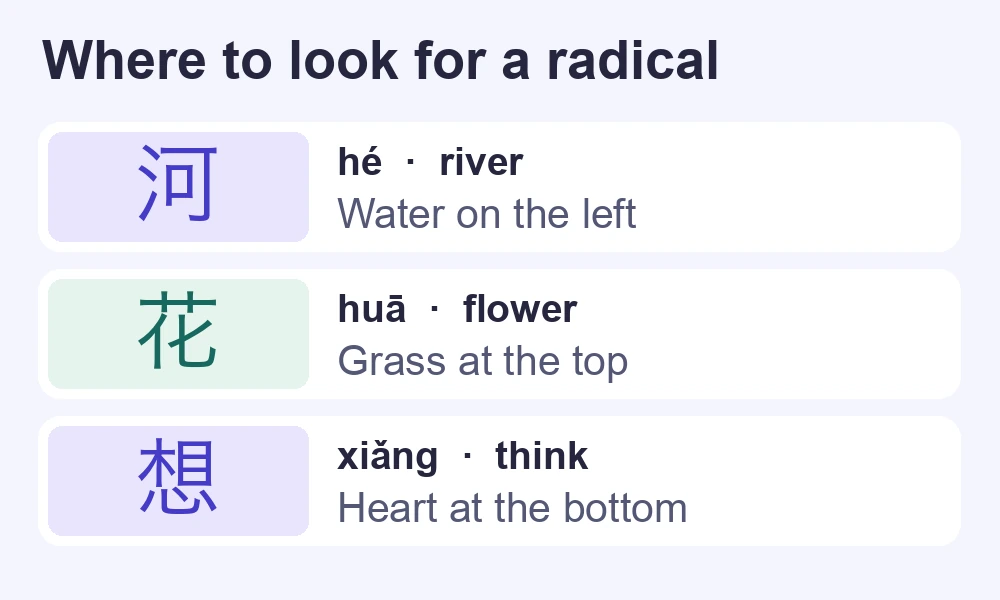
Pay attention to position as well as shape. 河 has three dots on the left. 花 (huā, flower) has 艹 across the top. In 想 (xiǎng, think or miss someone), look below 相 for 心. Read down a column of familiar words and try tracing just the component with your finger. An enclosed character may need another look: the frame in 国 is 囗, the enclosure radical, which is distinct from the mouth radical 口 in 吃.
50 Chinese radicals with examples
Use these tables as a reference beside your vocabulary list. Each row counts once, including full and compressed forms. The short English cue names the component. The examples show characters in which you can spot it. In some of those characters it helps more with recognition than with guessing a modern meaning. Start with one group and come back for another when you meet it in a word.
People and the body
| Form | Memory cue | Examples |
|---|---|---|
| 人 · 亻 | person | 你 you · 他 he |
| 口 | mouth | 吃 eat · 喝 drink |
| 女 | woman | 她 she · 姐 older sister |
| 子 | child | 孩 child · 孙 grandchild |
| 心 · 忄 | heart, feeling | 想 think · 怕 fear |
| 手 · 扌 | hand | 打 hit · 拍 pat |
| 目 | eye | 眼 eye · 睡 sleep |
| 足 · ⻊ | foot | 跑 run · 跳 jump |
| 月 | moon | 期 period · 朗 bright |
| 疒 | illness | 病 illness · 疼 ache |
| 大 | big | 太 too · 天 sky |
| 小 | small | 少 few · 尖 pointed |
| 又 | again, originally a hand | 双 pair · 取 take |
| 力 | strength | 助 help · 动 move |
Nature and materials
| Form | Memory cue | Examples |
|---|---|---|
| 水 · 氵 | water | 河 river · 海 sea |
| 木 | tree, wood | 树 tree · 杯 cup |
| 日 | sun, day | 时 time · 晚 late |
| 火 · 灬 | fire | 烧 burn · 热 hot |
| 土 | earth | 地 ground · 块 lump |
| 艹 | grass, plants | 花 flower · 茶 tea |
| 雨 | rain | 雪 snow · 雷 thunder |
| 山 | mountain | 峰 peak · 岛 island |
| 田 | field | 界 boundary · 男 male |
| 犬 · 犭 | dog, animal | 狗 dog · 猫 cat |
| 马 | horse | 骑 ride · 驴 donkey |
| 冫 | ice | 冷 cold · 冰 ice |
| 米 | rice | 糖 sugar · 粉 flour |
Buildings, clothes and tools
| Form | Memory cue | Examples |
|---|---|---|
| 宀 | roof | 家 home · 室 room |
| 门 | gate | 间 space · 问 ask |
| 广 | shelter | 店 shop · 床 bed |
| 车 | vehicle | 辆 vehicle counter · 轮 wheel |
| 食 · 饣 | food | 饭 cooked rice · 饿 hungry |
| 糸 · 纟 | silk, thread | 线 thread · 织 weave |
| 衣 · 衤 | clothing | 裙 skirt · 袜 sock |
| 金 · 钅 | metal | 铁 iron · 银 silver |
| 贝 | shell, value | 贵 expensive · 购 buy |
| 竹 · ⺮ | bamboo | 笔 writing brush · 筷 chopsticks |
| 刀 · 刂 | knife | 切 cut · 刻 carve |
| 玉 · 王 | jade | 珠 pearl · 珍 precious |
Speech, movement and other clues
| Form | Memory cue | Examples |
|---|---|---|
| 言 · 讠 | speech | 说 speak · 读 read |
| 辶 | walking, movement | 进 enter · 近 near |
| 走 | walk, go | 赶 hurry · 越 cross |
| 攵 | tap, strike | 放 release · 教 teach |
| 欠 | yawn | 歌 song · 欢 joyful |
| 见 | see | 视 look at · 观 observe |
| 页 | head | 顶 top · 额 forehead |
| 阜 · 阝 (left) | mound, hill | 陵 mound · 险 steep, dangerous |
| 邑 · 阝 (right) | town, settlement | 都 capital · 郊 outskirts |
| 立 | stand | 站 stand · 端 upright |
| 示 · 礻 | ritual, offering | 礼 ceremony · 祝 wish, bless |
Two lookalikes deserve a second look. 阝 on the left in 院 belongs to 阜, whereas 阝 on the right in 都 belongs to 邑. The moon shape 月 also appears in many body words, but the left side of 腿 (tuǐ, leg) historically represents 肉, flesh. Simply labelling every 月 “moon” would give you a very strange way to remember a leg.
How to use a radical when reading a new word
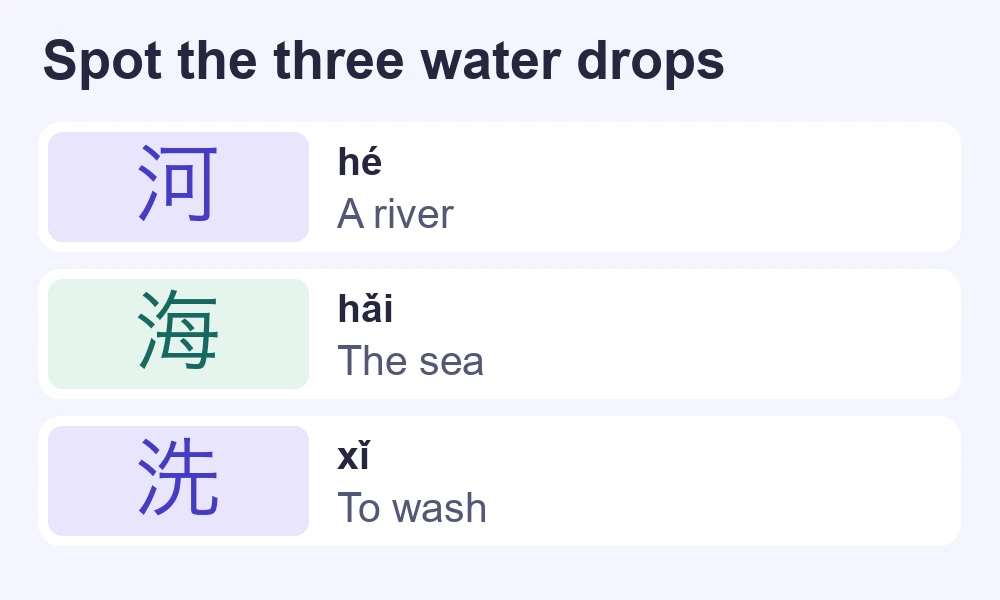
Take 河 (hé, river), 海 (hǎi, sea) and 洗 (xǐ, wash). Circle the shared part. Then hide the English and try to tell the three words apart. The three dots can get you thinking about water, but only the rest of the character tells you which item you are looking at. Sort the words by how you would use them: two name bodies of water, while one names an action.
When you move on to a longer list, look inside words as well as at single characters. In 银行 (yínháng, bank), 钅 helps you recognise 银, silver. The word to learn is the whole two-character expression. A learner who remembers “metal” but cannot recognise 银行 on a sign still has something useful to practise. Pick a word in the HSK 2 vocabulary list and write a phrase you might actually say with it.
Try the same exercise with a component that fails to predict the definition. 汉 (Hàn) also has 氵. Knowing that gives you a way to recognise 汉字 (Hànzì, Chinese characters), even though “water” gives you little help translating the word. A clue can earn its place in your notes simply by helping you tell two written forms apart.
How to tell a radical from a sound clue
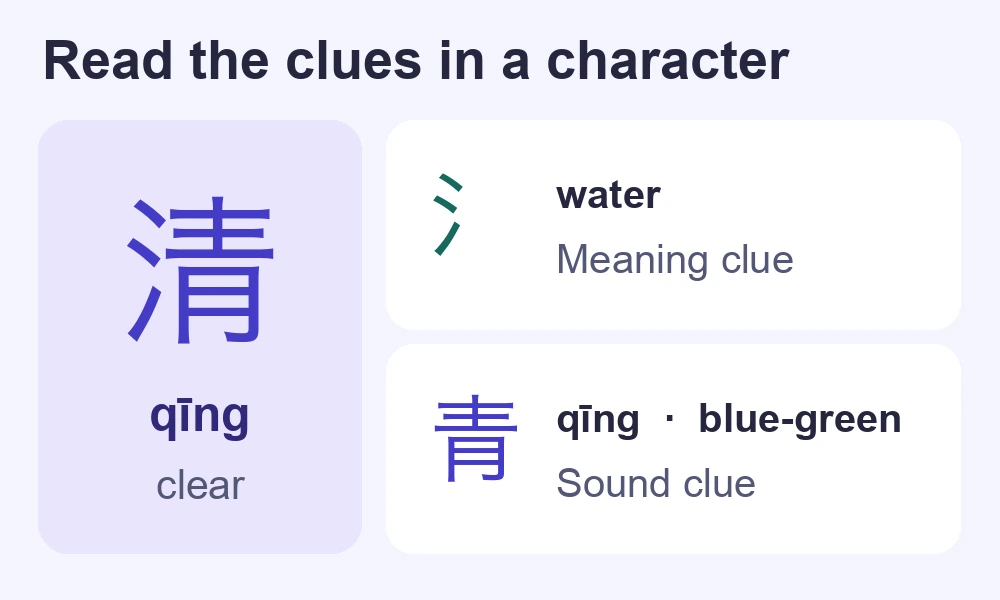
Compare 清 (qīng, clear), 请 (qǐng, please or invite) and 情 (qíng, feeling). All three contain 青 (qīng). The left side changes from water to speech to heart. The right side stays the same. Now listen to them or read their pinyin aloud. The syllables resemble each other, while the different tones matter to the words you are saying.
You can put the distinction to work in a real exchange. 请进 (qǐng jìn) invites someone to come in. 清水 (qīngshuǐ) means clear or plain water. If you see someone holding a door, the speech radical gives you a better first guess than the water radical. Read everyday greetings and polite expressions in Chinese to see 请 in context.
How to practise radicals as your vocabulary grows
Choose a handful of familiar words, cover their translations and identify one recurring component. Turn each choice into a retrieval question. For 说, you might ask, “Which part also appears in 话?” For 妈, ask, “Which part gives me the syllable?” Finish by reading each complete word without your notes. On another day, try the same questions on unfamiliar examples from the HSK 3 word list.
At higher levels a familiar shape can help you recognise a longer expression. Notice 雨 in 雾 (wù, fog) and 霜 (shuāng, frost), or 纟 in 线 (xiàn, thread or line) and 织 (zhī, weave). Add a new word to an old group and say what makes the new item distinctive. If a character keeps slipping away, draw its layout from memory and compare where the pieces sit before practising it again.
Questions about Chinese radicals
Can I work out a pronunciation from the radical alone?
A radical can help you locate the dictionary entry. For a pronunciation guess, look for a sound-bearing component, then check the reading of the entire word. This matters especially when two familiar-looking characters differ only in tone.
Do I need a separate flashcard for every shape?
Make a separate card when two forms repeatedly confuse you. If you already spot 亻 in 他 and recognise the word immediately, spend the next few minutes reading a phrase with 他. Recognition has already done its job.
What comes after the first 50?
Let your own reading choose. Someone reading menus might add 酉, the wine-jar component in 醋 (cù, vinegar). Someone reading about the outdoors might choose 石, stone, in 岩 (yán, rock). These are bonus examples. Each becomes easier to remember when you meet it in a word you wanted to know.
Continue learning
Choose a level in the HSK flashcard library and find three examples of a radical you can now recognise. Use the HSK 4 Chinese–English word list if you would like a longer reading challenge.