
Chinese numbers from zero to a billion
At a market you hear 十二 and then 二十. Both prices contain the words for “two” and “ten”. Which one is cheaper? In Mandarin, the order tells you whether to add or multiply. Once you can tell twelve from twenty, the same idea takes you through hundreds, thousands and even millions.
Learn the digits below, then try your own number in the converter. For a phone number or a year, read the digits individually. For a price, quantity or distance, read the whole number.
Count from 0 to 10 in Mandarin
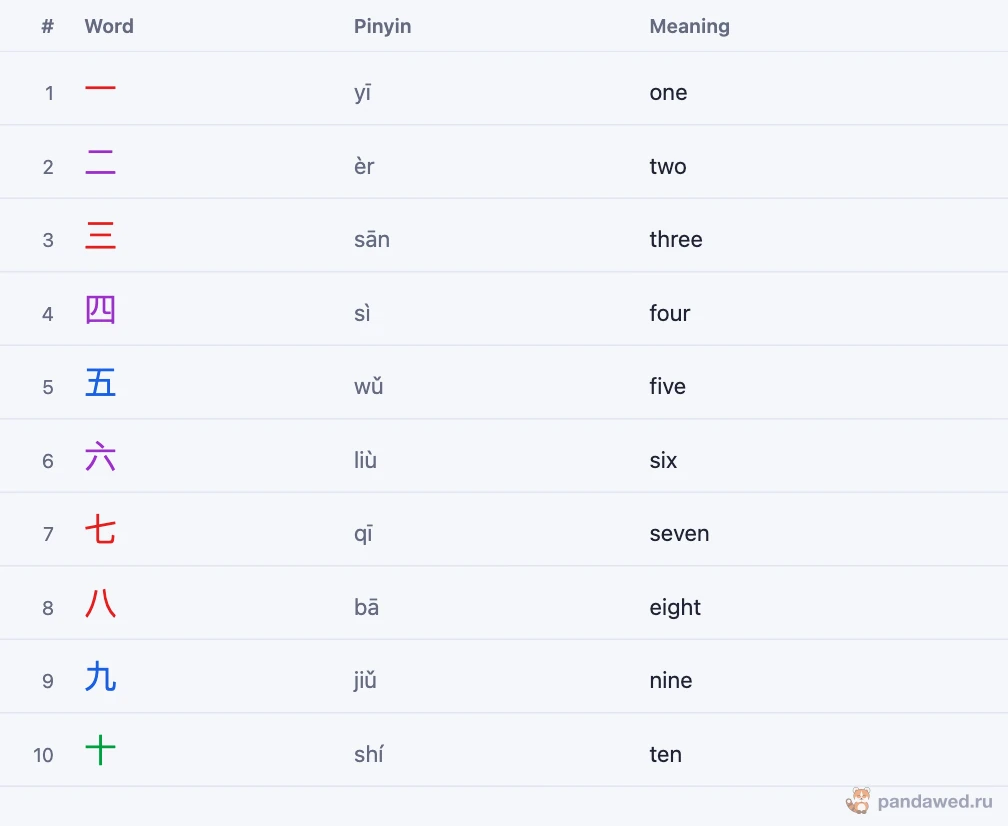
One, two and three give you a visual start. Count the horizontal strokes in 一, 二 and 三. From four onwards, learn each shape with its sound. The mark above a vowel in pinyin tells you its tone. Compare the steady pitch of 三 sān with the falling pitch of 四 sì.

| Number | Character | Pinyin |
|---|---|---|
| 0 | 零 | líng |
| 1 | 一 | yī |
| 2 | 二 | èr |
| 3 | 三 | sān |
| 4 | 四 | sì |
| 5 | 五 | wǔ |
| 6 | 六 | liù |
| 7 | 七 | qī |
| 8 | 八 | bā |
| 9 | 九 | jiǔ |
| 10 | 十 | shí |
For a calendar year, read the digits in order. In 二〇二六年 (èr líng èr liù nián, “the year 2026”), the circle 〇 stands for zero. When 2,026 is a quantity, its reading includes 千 “thousand”. Try both readings before checking the converter below.
Flashcards: can you recognise five numbers?
Build two-digit numbers
Eleven through nineteen begin with 十, followed by the units digit. Eleven is 十一 shíyī, literally “ten, one”. Fifteen is 十五 shíwǔ. For a multiple of ten, put the multiplier first. 二十 èrshí is two tens, and 九十 jiǔshí is nine tens. Then add any units at the end. 九十九 jiǔshíjiǔ is nine tens plus nine.

Back at the market, 十二元 (shí’èr yuán) is twelve yuan and 二十元 (èrshí yuán) is twenty yuan. Move the 二 and the price changes. For position in a sequence, put 第 dì before the number. 第一 is “first”, 第二 is “second” and 第十二课 is “Lesson 12”.
Hundreds, thousands and the zeros in between
Multiply 百 bǎi by the digit before it for hundreds. 三百 sānbǎi is 300. Do the same with 千 qiān for thousands. 四千 sìqiān is 4,000. Read the largest place first and work down. In 115, the tens place sits inside a larger number, so the one before 十 appears explicitly: 一百一十五.

Think of 105 as one hundred, a gap, then five. Say 一百零五 (yìbǎi líng wǔ). In 1,005 there are two empty places between the thousand and the five, but a single 零 still does the job: 一千零五 (yìqiān líng wǔ). You can stop at the last non-zero place. For 110, 一百一十 is complete. There is no need to say the final zero.
Use 万 for ten thousand and 亿 for a hundred million
English inserts a new name every three digits after a thousand. Mandarin groups the digits in fours. Starting at the right, draw a line after four digits. For 12,345,678 you get 1234 | 5678. Say the number in the first group, add 万 wàn, then say the second group: 一千二百三十四万五千六百七十八.

| Number | Mandarin | How to group it |
|---|---|---|
| 10,000 | 一万 · yíwàn | One group of ten thousand |
| 100,000 | 十万 · shíwàn | Ten groups |
| 1,000,000 | 一百万 · yìbǎi wàn | One hundred groups |
| 10,000,000 | 一千万 · yìqiān wàn | One thousand groups |
| 100,000,000 | 一亿 · yíyì | One hundred million |
| 1,000,000,000 | 十亿 · shí yì | Ten hundred-million groups |
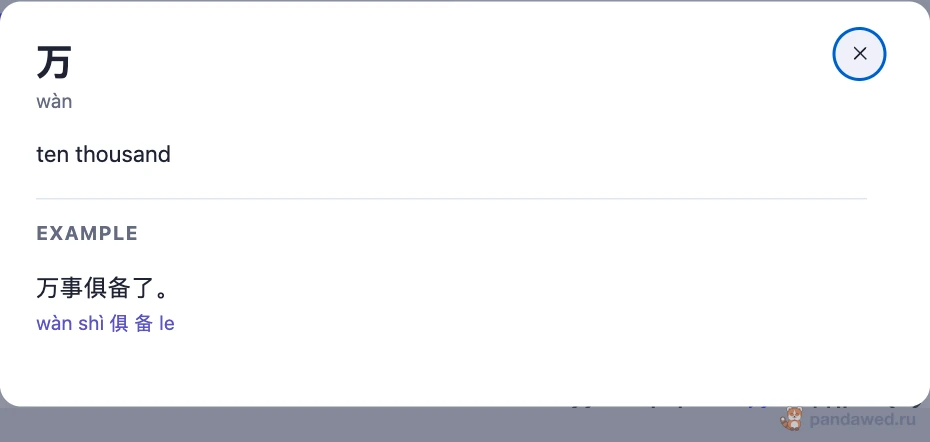
You will also see 万 outside prices and quantities. In 万物 (wànwù), literally “ten thousand things”, the idea is “all things”. In 万事俱备 (wàn shì jù bèi), everything is ready. Looking up the whole expression can give a more useful meaning than translating the numeral alone.
Mandarin number converter
Try 10,005 followed by 10,050. One ends in five units, the other in five tens. Listen for the extra 十 in the second number. The converter reads quantities; to dictate an account number, phone number or year, say each digit in sequence.
When does “two” become 两?
Use 二 èr when counting aloud or naming a digit. Twelve is 十二, twenty is 二十 and twenty-two is 二十二. For “two of something”, Mandarin usually puts 两 liǎng before a measure word. Two people are 两个人 (liǎng ge rén), and two books are 两本书 (liǎng běn shū). That distinction matters when ordering: 两杯茶 asks for two cups of tea.

With larger place values, 两千, 两万 and 两亿 are common. Both 两百 and 二百 can mean 200. Another pronunciation change concerns 一. Its counting form is yī. Before the fourth tone of 万 it is normally yí, as in 一万 yíwàn. Before 百 or 千 it normally falls: 一百 yìbǎi and 一千 yìqiān. Listen to a whole number as a phrase.
Why 4, 8, 9 and 520 can mean more than a number
In Mandarin, 四 sì (“four”) and 死 sǐ (“die”) differ in tone. Their resemblance helps explain why some buildings skip a floor number containing four. 八 bā (“eight”) has an association with prosperity through its resemblance to 发 fā in 发财 (fācái, “prosper”). People vary in how much importance they give these associations.

九 “nine” and 久 “a long time” have the same reading, jiǔ. In a wedding message a nine can suggest something lasting. 六六大顺 (liùliù dàshùn) expresses a wish for everything to go smoothly. In a text message, 520 can stand for 我爱你 (wǒ ài nǐ, “I love you”). Read the digits separately, wǔ èr líng, to hear the playful resemblance. This also explains the romantic use of the date May 20, written 5.20.
Count to ten on one hand
At a busy stall, sellers sometimes show a number with one hand. A common gesture for six extends the thumb and little finger. For seven, the tips of the thumb and two fingers meet. Eight uses the thumb and index finger at an angle, and nine curls the index finger into a hook. Ten may be shown with a closed fist or two index fingers crossed like 十.

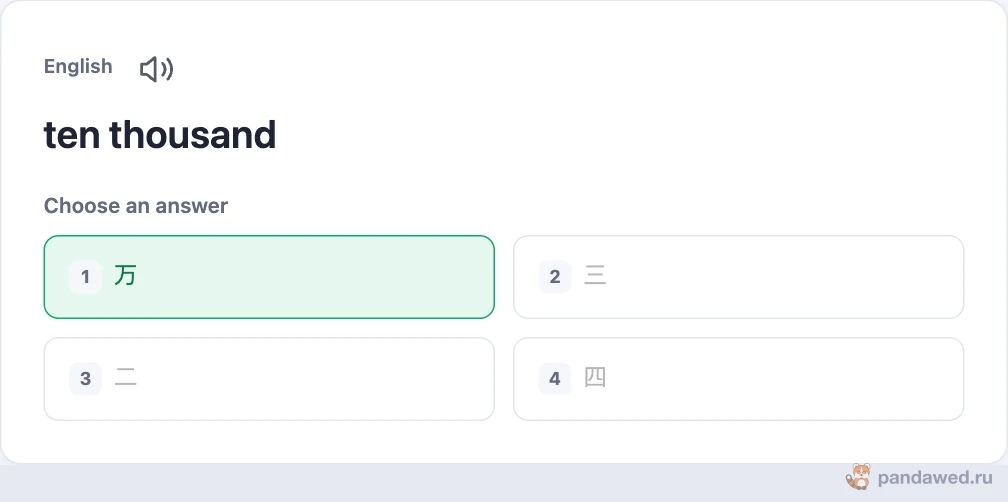
Number quiz: which number do the characters represent?
Practise reading numbers both ways
Start with numbers you already use. Read a price aloud from a receipt, say the day of the month and dictate the last four digits of a made-up phone number. Repeat with the characters covered, then with the figures covered. Switching the direction exposes a familiar problem: recognising 五 on a card can feel easy even when recalling it from “five” still takes a moment.
- Read a short list. Work through one to ten, then add 零, 百, 千 and 万. The HSK 1 word list lets you see numbers alongside the words you will use with them.
- Flip the cards. Rate a word after answering. When a word is difficult in one direction, change the front of the card and try the reverse.
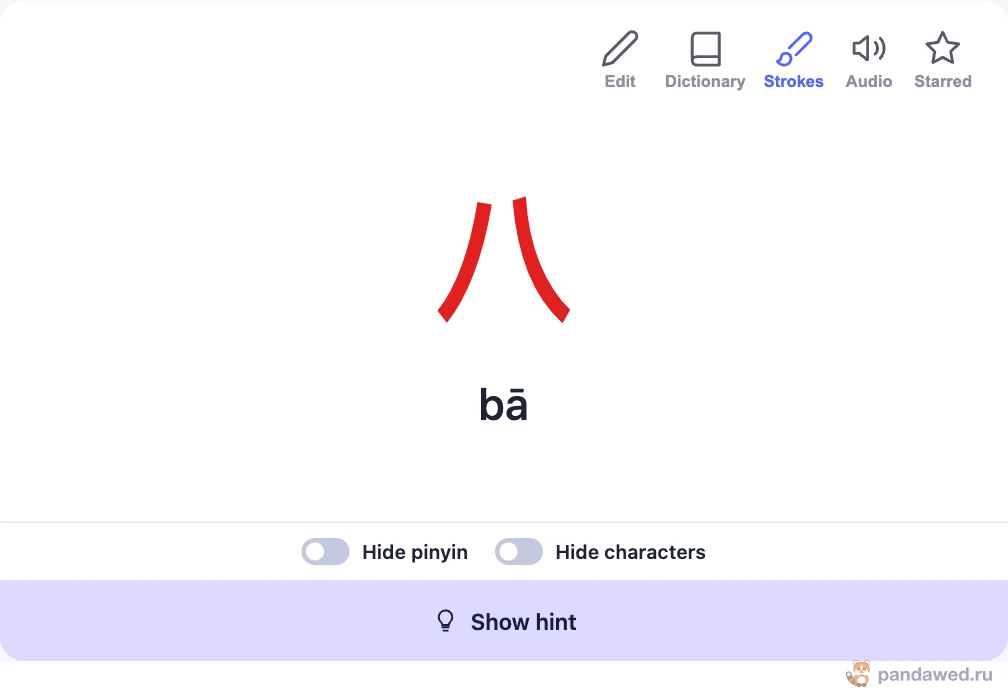
- Write a character. Watch the three strokes of 万, then trace it yourself. A guide to Chinese radicals can help you spot recurring shapes as your vocabulary grows.
- Test a new example. If you have just read 105, try writing 205 from memory. Explain why the zero belongs in the middle. Then test a number with a final zero.

To make the numbers part of a conversation, combine them with a greeting and a request. The everyday Mandarin greetings guide gives examples of how to open an exchange. You can keep your own prices and dates together in a personal practice deck.
Frequently asked questions
How do you write the numbers from one to ten in Chinese?
The characters are 一, 二, 三, 四, 五, 六, 七, 八, 九 and 十. Zero is 零 (líng).
How do you say a hundred, a thousand and ten thousand?
One hundred is 一百 (yìbǎi), one thousand is 一千 (yìqiān) and ten thousand is 一万 (yíwàn).
What is a million in Mandarin?
A million is 一百万 (yìbǎi wàn), literally one hundred groups of ten thousand. A billion is 十亿 (shí yì).
Why do some people avoid the number four?
Four, 四 sì, sounds similar to 死 sǐ, meaning “die”. This association can influence choices about floor numbers, phone numbers and gifts.
Which numerals are used in China?
Arabic numerals are common on price tags, clocks and keypads. Chinese characters appear in written quantities and dates. Financial forms may use special numerals such as 壹, 贰 and 叁 to make the amounts harder to alter.